
Vacation in Styria
Which Region Suits Which Holiday
Styria is happily sold as one destination and is in truth six. Between the Dachstein and the wine road lie three hours by car and two entirely different holidays - which is why the most important decision comes before the accommodation.
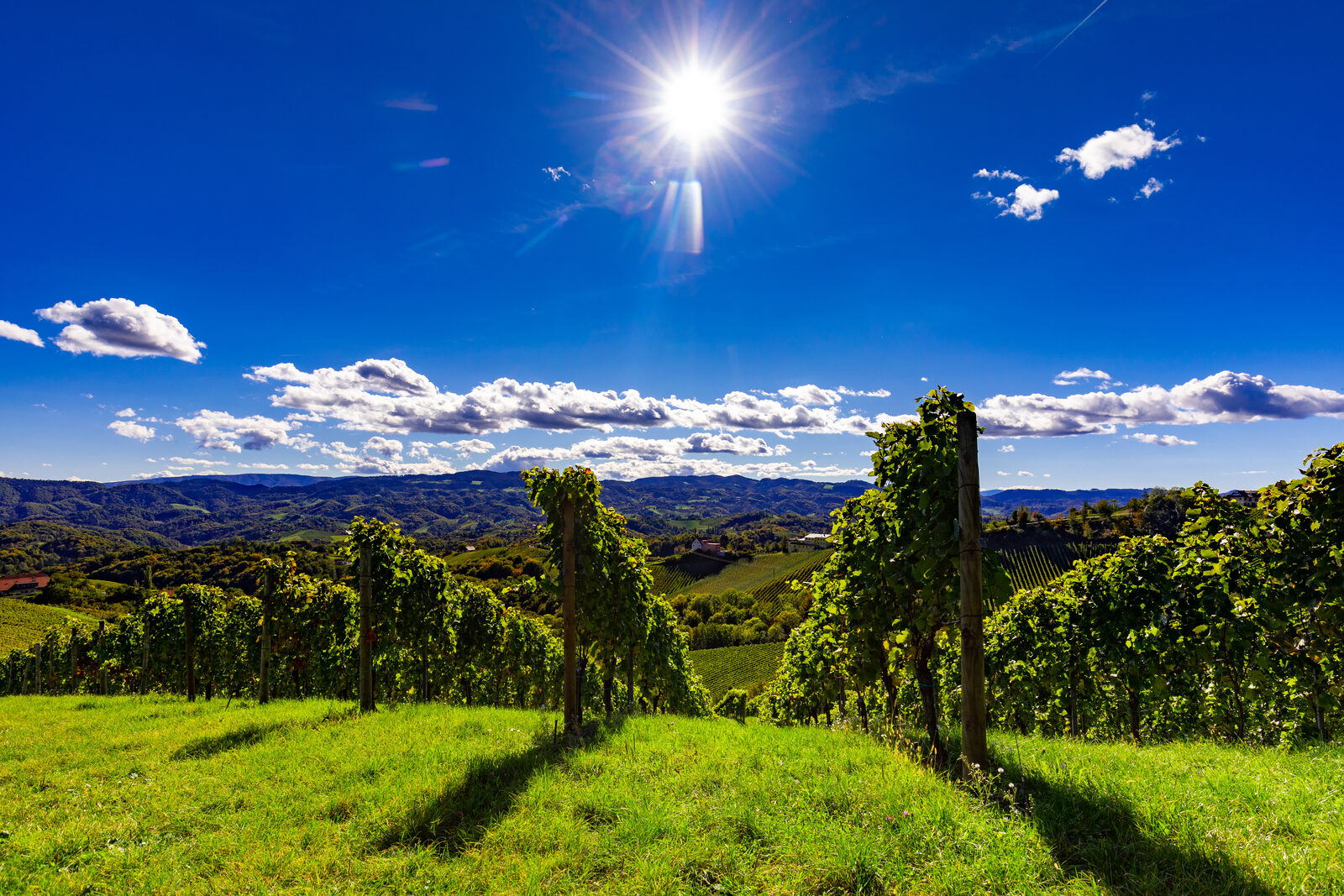
As a search term, "vacation in Styria" is about as precise as "vacation in Italy". The province stretches from the Dachstein to the Slovenian border, and between its northernmost and southernmost points lie roughly three hours by car and two landscapes with nothing in common. Anyone planning a holiday here makes the most important decision not at the accommodation but one level above it.
So this page starts with orientation: which region enables which holiday - and when each one makes sense. After that it gets specific, with a look at West Styria, where we happen to sit.
The six Styrias
Upper Styria and the Ausseerland
The north: Dachstein, Gesäuse, Hochschwab, Ausseerland, plus the classic winter sports areas. This is where the alpine holiday happens - with everything that comes with it: altitude, mountain huts, cable cars, dependence on the weather.
Suits: mountain sports in summer, skiing in winter, lakes. Does not suit: short stays, because the journey is long and one bad-weather day out of two costs half the holiday.
Graz and surroundings
Austria's second-largest city, UNESCO World Heritage and UNESCO City of Design, with the clock tower, the Schlossberg and an old town in which medieval buildings and modern architecture get along unusually well. Two nights genuinely suffice for a city weekend because the distances are short.
Suits: culture, food, architecture, travellers without a car. Does not suit: recovery in the narrower sense - a city entertains, it rarely calms.
The spa region of Eastern Styria
The south-east, with Loipersdorf, Bad Waltersdorf and Bad Radkersburg. The region most strongly designed for short stays in the whole province: everything is booked, everything has a time, everything works.
Suits: wellness, winter, travellers who want a ready-made routine. Does not suit: silence. Spas are busy at weekends, and a treatment appointment remains an appointment.
South Styria
The best-known wine region in the province, around Gamlitz, Ehrenhausen and Leibnitz, with the South Styrian Wine Road as its spine. Scenically extraordinary - hills, rows of vines, Kellerstöckl, Klapotetz - and correspondingly lively between May and October.
Suits: wine, food, landscape, if crowds are not a problem. Does not suit: spontaneous weekends in September, because everything is booked.
West Styria
The Schilcherland between Ligist, Stainz, Deutschlandsberg and Eibiswald, at the eastern foot of the Koralpe. The same gentle hills as in South Styria, the same viticulture - but a different grape variety and considerably fewer people passing through. The difference is historical, not qualitative: South Styria was developed for tourism earlier and more heavily.
Suits: quiet, wine off the main routes, longer stays, proximity to Graz. Does not suit: anyone who needs a choice of ten restaurants in the evening.
Eastern Styria and the Apfelland
Between Graz and the Hungarian border: fruit growing, the Vulkanland, Riegersburg, small towns. The least known of the six regions and often the most practical for families, because the distances are short and the destinations manageable.
The rule of thumb: one region per week
With a week available, choose one region and at most brush a second as a day trip. Two bases in seven days mean a moving day, and a moving day is in practice a lost day - checking out, driving, checking in, shopping.

What Styria as a whole is about
Three things turn up in practically all six regions and together explain why the province is called the green heart of Austria.
The forest. Considerably more than half the land area is wooded - proportionally more than in any other Austrian province, and the reason for the nickname. In practice it means you are ten minutes from a forest almost anywhere.
The wine. Viticulture shapes the entire southern half, in very different forms. South Styria is dominated by Sauvignon Blanc, Morillon and Welschriesling; West Styria by Schilcher, a rosé from the indigenous Blauer Wildbacher grape, which is barely grown in any significant quantity outside this region. What makes it distinctive is described under Discovering Schilcher.
The pumpkin seed oil. The region's green gold is not a souvenir gag but a staple - on salad, in soup, over vanilla ice cream. Anyone who has tried the last of those stops laughing about it.
On top of that comes a Buschenschank culture that exists in this form only in Austria: wine-growing estates serving their own produce, with irregular opening hours and no restaurant kitchen. A selection is listed under Top 5 Buschenschanken around Stainz.
When to come
April and May. Orchard blossom, fresh green, the streams carrying more water. The quietest time in the south and west with already usable weather.
June to August. Long evenings, warm nights. The south can get hot; the hills are then more pleasant than the plain, and an outdoor pool within walking distance is worth more than any air conditioning.
September and October. For many the finest time: grape harvest, golden light, warm days and cool nights. Also the busiest - anyone travelling then should book early. What a harvest looks like up close is described under Grape Harvest in West Styria.
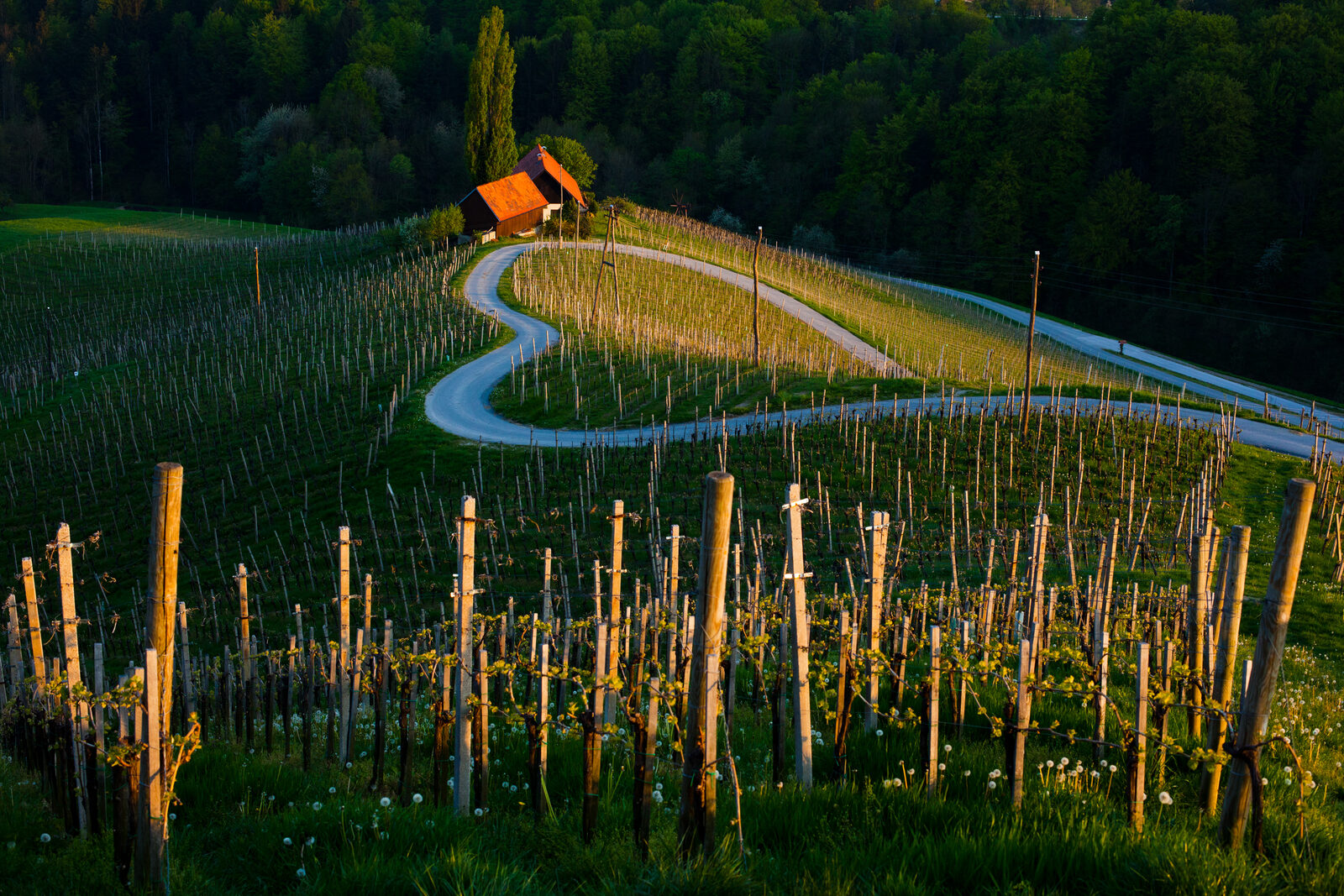
November to March. Winter sports in the north; in the south and west the underrated season: mist over the vineyards, bare vines in straight rows, cheaper accommodation and paths on which you meet nobody. Many Buschenschanken are closed - anyone who knows that plans accordingly.
Driving times, realistically
Styrian roads follow the valleys, not the straight line. Two places fifteen kilometres apart on the map are often twice as far by road. Anyone taking driving times from a map application usually plans well; anyone estimating them from distance usually plans too tightly.
Getting here
By car via the A2 from Vienna (around two and a half hours to Graz), the A9 from Linz and Salzburg, or over the Pack from Carinthia. From Slovenia and northern Italy, the south of Styria is often closer than you would think - Ljubljana to Graz is around two hours.
By train as far as Graz, then onward on regional connections. For West Styria, Deutschlandsberg is the nearest larger station; the last few kilometres run by connecting bus or taxi.
By plane via Graz airport south of the city, the nearest one for South and West Styria.
For the local roads outside Graz: a car is practically necessary. Public transport in rural areas is designed for commuting, not for excursions - at weekends it is correspondingly thin.
Which accommodation suits which holiday
Styria offers the full range, and the choice decides more about the stay than most people expect.
Hotel and guesthouse. Sensible for one or two nights, for city trips and whenever a laid breakfast and somebody at a reception desk genuinely make the stay easier.
Vacation apartment. From the second, at the latest the third night, the more practical form: your own kitchen, your own key, no external daily routine. What to check before booking - final cleaning, local tax, minimum stay, check-in times - is listed under Vacation Apartment in Styria.
Vacation house. For groups, family celebrations and retreats. What the difference is between one house and several adjacent apartments is described under Vacation House in Styria.
An honest comparison of the three forms for the specific case of Stainz is under Accommodation in Stainz and Hotel Stainz.
West Styria as a base
We are in Stainz, in the middle of the Schilcherland, and that naturally colours the view. Even so, there is a factual case for why this region is the better base for many kinds of holiday than its better-known neighbours: it lies around forty minutes by car from Graz, which makes city and countryside possible on the same day. It matches South Styria scenically and is considerably emptier. And with Stainz it has a village that has a supermarket, a pharmacy, a doctor, an outdoor pool and a main square, without feeling like a holiday resort.
Anyone wanting to turn that into a stay of several days will find the overview under Vacation in West Styria, the wine side under Vacation in the Schilcherland and the nature side under Nature Vacation in Styria.
The five apartments at Johann & Anna sit by the Stainzbach, a few minutes' walk from the main square: own kitchen, own bathroom, Wi-Fi, free parking, garden by the stream. No reception, no obligatory breakfast - anyone who wants one gets it through the partnership with the Stainzerhof in the village.
A holiday in Styria rarely gets better by seeing more of it. It gets better when you pick one region and give it the time it needs.
Which region of Styria is the most beautiful?
That cannot be answered, because the regions enable different holidays. Upper Styria for mountains, South and West Styria for wine, the spa region for wellness, Graz for the city.
When is the best time to visit Styria?
For the south and west, May to June and September to October. For Upper Styria, July to September in summer and December to March in winter.
How long should a holiday in Styria be?
Three to five days for one region, at least a week for two. Combinations of more than two regions are road trips, not holidays.
Do you need a car in Styria?
Not in Graz. Outside the cities, practically yes - the villages lie far apart and public transport is designed for commuting, not for excursions.
What is the difference between South and West Styria?
Different grape varieties, different wines - and considerably less traffic in the west. The landscape is comparable, the tourist development is not.
What should you definitely have tried in Styria?
Pumpkin seed oil, a wine from the respective region and a Brettljause at a Buschenschank. Which wine goes with which dish is described under Which Wine Pairs with Which Styrian Dish.
Is Styria a good destination in winter?
In the north for winter sports, in the south and west for anyone looking for quiet: less traffic, cheaper accommodation, mist over the vineyards.
How do you get to Styria?
Via the A2 from Vienna, the A9 from Linz and Salzburg, by train as far as Graz. Graz airport lies south of the city and is the nearest for South and West Styria.