
Wine Vacation in Styria
Several Days in the Schilcherland Instead of One Afternoon
A wine vacation in Styria doesn't need a second day at the same tavern, or a hotel room where the bottles you bring back stay in the suitcase. In the Schilcherland around Stainz, the wineries sit close together - and a kitchen of your own turns what you brought home into that evening's wine.
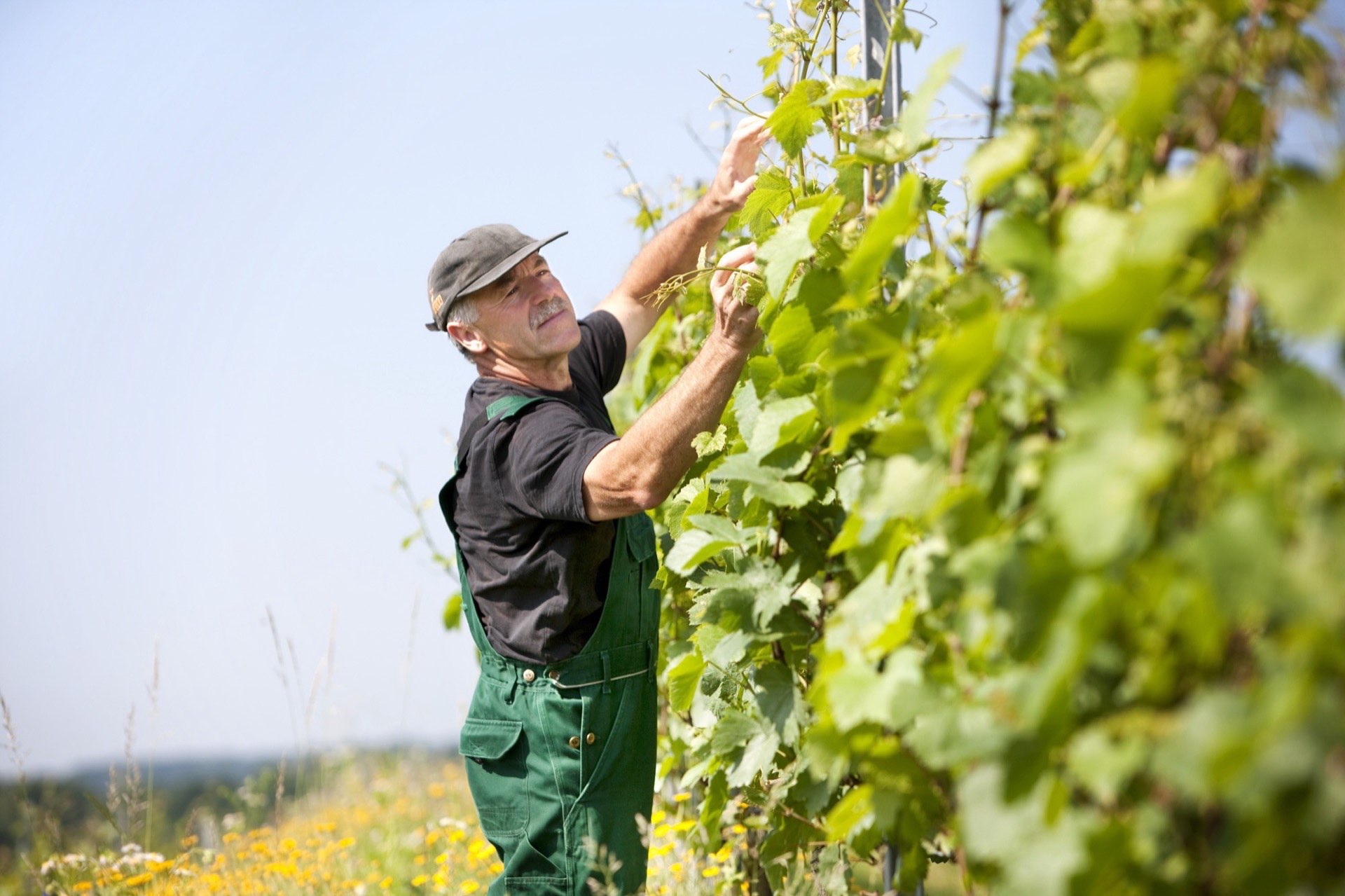
A wine vacation in Styria differs from a wine tasting roughly the way a trip differs from an outing. On a tasting, you drive to a winery for an afternoon, try a few glasses, and head home or back to the hotel. On a wine vacation, you stay - and that difference alone changes how the region comes across. In the Schilcherland around Stainz, named after the pink-hued wine made from the Blauer Wildbacher grape, enough wineries and wine taverns sit within cycling or short driving distance of each other to fill several days, not just one. Anyone who chooses an apartment over a hotel room gets something a single tasting never calls for: a fridge for the bottles you bring home, and an evening on which you actually drink them.
Why the Schilcherland suits more than a day trip
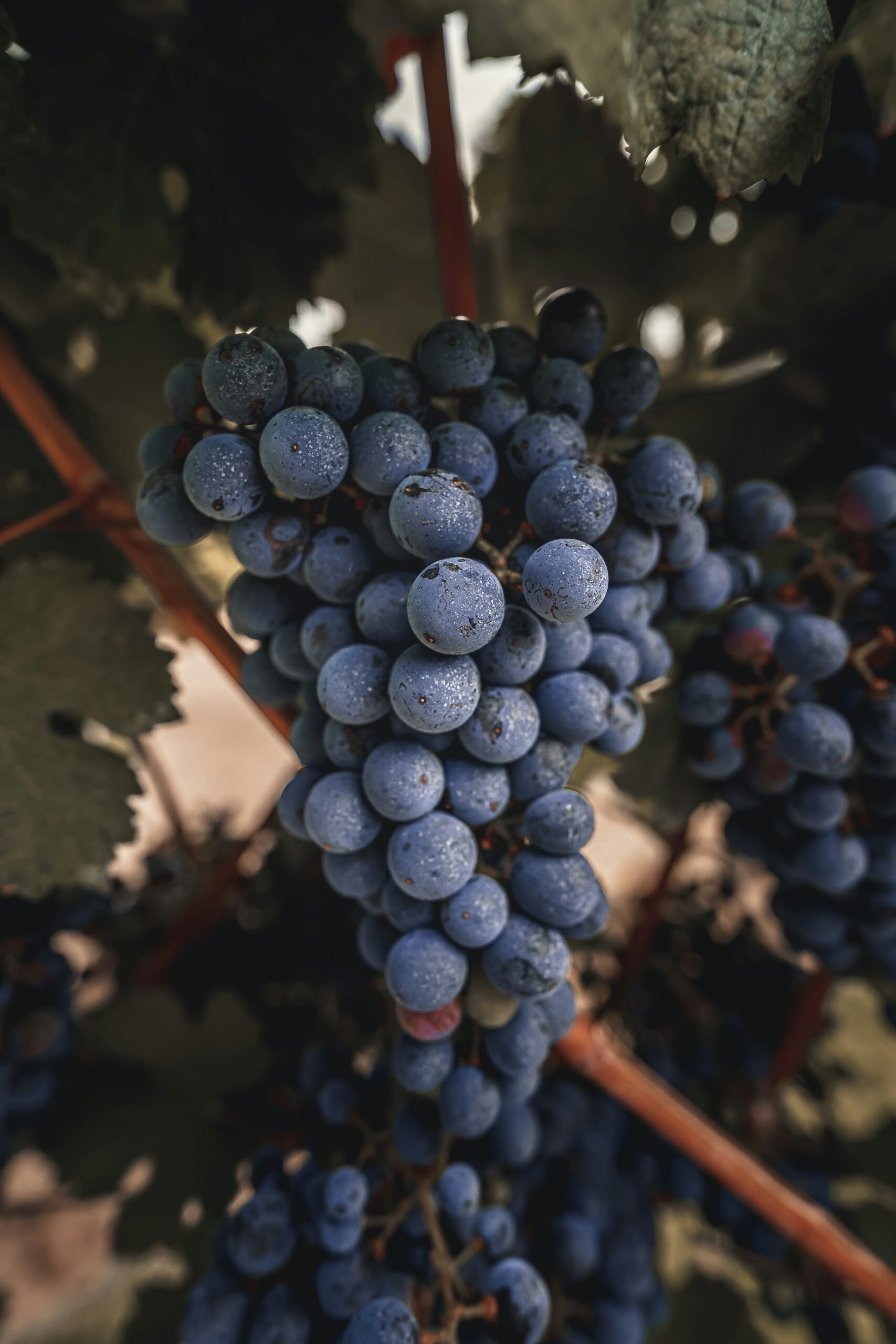
The Schilcherland isn't a wine region you can cover in one afternoon. It stretches across several municipalities of West Styria, from Stainz through St. Stefan ob Stainz to Deutschlandsberg, with dozens of winemaking families, some of whom have worked the same slope for generations. Schilcher itself is a rarity: a dry, firmly acidic rosé pressed exclusively from the native Blauer Wildbacher grape, which grows in meaningful quantity almost nowhere else. Visit a single wine tavern and you get an impression. Stay several days and you notice how differently the same wine tastes from one farm to the next - drier here, fruitier there, depending on the slope, the way it's made, and the hand of the winemaker behind it.
That's exactly what a Styria vacation built around food and wine comes down to: not a single appointment, but a week or a long weekend in which a winery, a wine tavern, a stretch of landscape, and a quiet place to stay add up to something whole. A vacation centered on winemakers doesn't necessarily mean sleeping at the winery itself - most estates have neither the rooms nor the capacity for that. It means staying nearby, visiting several farms over several days, and spending the rest of the time wherever it's good to sit still.
A wine vacation in Styria: several wineries instead of one appointment
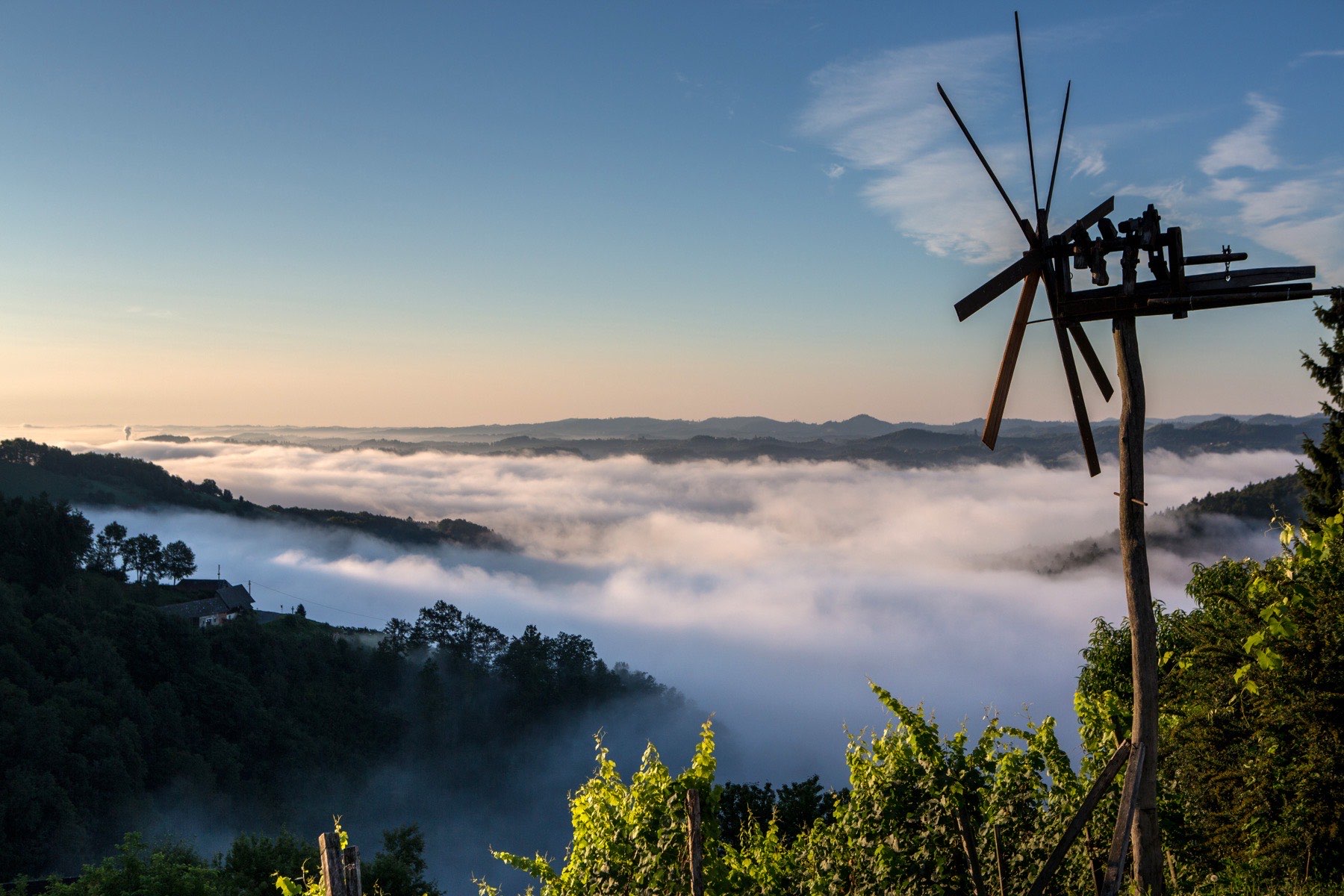
A Klapotetz, the traditional windmill that scares starlings out of the vineyards, belongs to the picture of West Styria as much as the wine itself. Stay several days and you'll see the same vineyards at different times of day - fog in the morning, slanted light in the evening - and notice how much that picture shifts.
A loose rhythm for several days, not a fixed program
Unlike a single tasting - covered in detail in our article on wine tasting in the Schilcherland - a longer stay rewards some spacing out. Not a winery every single day, but a rhythm that leaves room for pauses too.
One way it might run: the first day belongs to arrival and a short, unplanned walk through the nearest vineyards. The second day is for the first winery visit, ideally at a smaller estate that still runs its tastings in person, on the farm itself. The third day can belong to the wine roads by bike - more on that in our article on cycling the wine roads in the Schilcherland - with a stop at a wine tavern standing in for a planned lunch. Another day can be set aside for the Flascherlzug, the historic narrow-gauge railway that runs through parts of the Schilcherland at certain times of year and offers a different view of the vineyards than a car or a bike ever could. And at least one day should have nothing on it at all - a morning in the garden, an afternoon with no destination.
Why a Styria wine vacation doesn't take well to a packed schedule
The mistake many people make when planning a wine vacation is the same one they make planning a city trip: too many stops, too little time. A winery visit rarely takes less than two hours if you don't want to rush it - the tasting itself, a conversation with the winemaking family, maybe a look into the cellar. Fit three of those into a single day and you usually leave with nothing from any of them except the memory of driving in between. A wine vacation worth taking plans for one estate a day and leaves the rest open.
Wine taverns: the other half of Styrian food culture
Wine alone doesn't make a food-and-wine vacation. What the Schilcherland adds is its Buschenschank culture - wine taverns where the winemaking family pours the wine itself and serves whatever the farm or the region produces alongside it: cold cuts, smoked meats, homemade spreads, often with a view straight out over their own vineyards. We've put together a selection of these around Stainz, with addresses and distances, in our article on the Top 5 Buschenschenken around Stainz. One thing worth planning around: Buschenschenken don't traditionally keep regular hours - they follow their own, often seasonal calendar, and a quick call or a look at the website before setting out saves you a closed door.
A wine tavern instead of a restaurant
The difference between a Buschenschank and a restaurant isn't just the menu, it's the whole principle behind it: there's no menu in the usual sense, just a selection of cold dishes and a few warm ones, chosen to go with the house wine. Anyone looking for Styrian food culture away from the usual guesthouses finds the most direct route to it right here.
Styrian food culture in the Schilcherland doesn't stop at wine and cold platters. Pumpkin seed oil from neighboring South Styria, bacon and smoked meats from small farms, homemade spreads ranging from pumpkin seed to Verhackert to Liptauer cheese - stay several days and you can work through this side of the region at your own pace instead of squeezing it into a single meal.
The Flascherlzug: another way to see the wine region
Hear the name for the first time and you might picture something built for children - in fact, the Flascherlzug is a historic narrow-gauge railway running through parts of the Schilcherland, named after the winemakers' bottles it once carried along its route. For a wine vacation, its real appeal is the view: it shows part of the vineyards from an angle you don't get on foot or by car - slow, on rails, looking out from an open carriage. Schedules and operating times are seasonal and change from year to year, so anyone planning a ride should check the current dates shortly before arriving.
Why an apartment makes more sense than a hotel room for a wine vacation
The most practical reason first: buy wine at several wineries and you quickly end up with six, eight, ten bottles. In a hotel room, those stay in the suitcase or the car - a kitchen of your own with a fridge, on the other hand, turns what you brought home into something you can actually use. A Schilcher bought from the winemaker that afternoon can be drunk on your own terrace that same evening, chilled, at your own pace, with no corkage fee and no restaurant markup.
The second reason is the rhythm itself. A wine vacation doesn't sit well with fixed breakfast hours and room cleaning on a schedule. Stay late at a wine tavern the evening before, and the next morning you want to decide for yourself when the first coffee happens - not at eight sharp in a breakfast room. We go into this difference between an apartment and a hotel room in more detail, wine aside, in our article on the vacation apartment in West Styria. Anyone who'd rather cook for themselves has the freer option built into breakfast anyway - more on that under Breakfast.
At Johann & Anna in Stainz, five apartments are available for exactly this, each with its own kitchen and its own character, right in the middle of the Schilcherland. From here, most of the surrounding wineries are ten to twenty minutes away by car, some even reachable by bike. You'll find an overview of all the apartments under All Apartments at a Glance.
Stainz as a base for the wine vacation
Stainz itself sits right in the middle of the Schilcherland and works as a base for trips in practically any direction across the wine region - toward St. Stefan ob Stainz, toward Deutschlandsberg, or into the smaller side valleys where some of the more interesting wine taverns are found, partly because they're less geared toward tourism. More on the town itself and its sights is under Stainz Up Close. Anyone comparing different places to stay nearby will find an overview under Places to Stay in Stainz Compared.
The best time of year for a wine vacation in the Schilcherland
The autumn grape harvest, usually between September and October, is the obvious choice for many people - the vineyards are turning color, and some wine taverns even let you watch or lend a hand with the picking. Spring, by contrast, brings quieter paths and the first wine taverns reopening after winter, usually with fewer visitors than autumn. Summer suits the combination of cycling and wineries especially well, with long evenings spent outside. Winter is the quietest stretch in the Schilcherland - not every wine tavern keeps regular hours, but you get the landscape without other visitors around.
Who a Styria wine vacation in the Schilcherland suits
Couples after a few days with no fixed program will find enough reasons for spontaneous winery visits in the Schilcherland without a single day needing to be planned out. Small groups of friends often split across several apartments and combine wine tastings with evenings together back at the apartment - no restaurant reservation, no set time. Anyone curious about wine who wants to learn more about the Blauer Wildbacher grape and what sets the Schilcherland apart benefits from the time to meet several winemaking families instead of just one, and to taste the differences firsthand. And anyone looking to pair a Styria food-and-wine trip with some movement will find enough variety across cycling, walking, and wine tasting to fill several days.
Anyone planning a Styria wine vacation in the Schilcherland will find a base in Stainz with short distances to winemakers and wine taverns - and, in the five apartments at Johann & Anna, a kitchen where the bottles you bring home actually get opened.
A broader overview of the wine region itself is under A Vacation in the Schilcherland.
See the apartments for your wine vacation or get in touch without obligation.
How many days should you plan for a Styria wine vacation in the Schilcherland?
Three to five days are enough to visit several wineries and wine taverns without rushing, without the stay turning into a tasting marathon.
What sets Schilcher apart from other rosé wines?
Schilcher is pressed exclusively from the Blauer Wildbacher grape, grown almost nowhere outside West Styria. Its firm acidity and dry character set it apart from the sweeter, softer rosés found in other regions.
Do you have to stay at the winery itself for a wine vacation?
No. Most wineries in the Schilcherland don't offer overnight stays. It's more common to stay nearby, in Stainz for instance, within reach of several estates.
Are wine taverns in the Schilcherland always open?
No, many keep hours only on certain weekdays or during particular seasons. Checking current opening hours before a visit is worth doing, especially outside the main season.
Can you reach the wineries by bike as well?
Yes, many wineries around Stainz sit on or near the signposted wine roads and can easily be linked together by bike - more detail on that in our article on cycling the wine roads.
Does the Flascherlzug run all year?
No, it operates seasonally and the schedules change. Anyone set on the ride should check current dates shortly before arriving.
How far are the nearest wineries from Johann & Anna?
Most estates around St. Stefan ob Stainz are just a few kilometers away, reachable by car in ten to twenty minutes.