
Wine Tasting in the Schilcherland
The Schilcherland lives on a wine that's barely known outside Styria – dry, rosé-colored, with an acidity you have to learn to love. If you want to try it, you don't have to travel far.
Where to Taste It
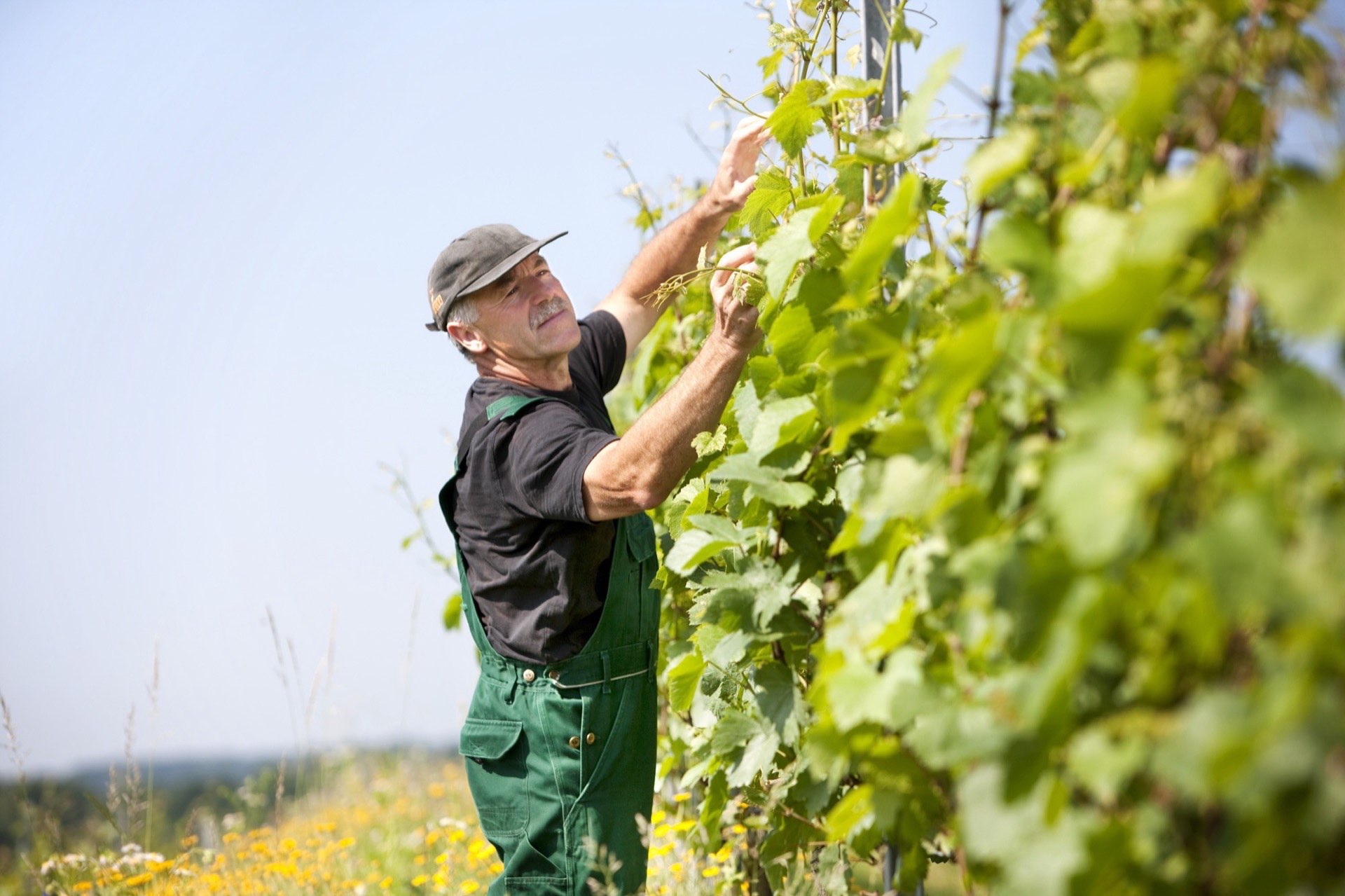
Several Buschenschenken and wineries around Stainz invite you in for tastings – often right at the winemaker's own place, without a grand vinotheque, but with a personal explanation of their wine. You'll find a selection in our article on the Top 5 Buschenschenken around Stainz. What's typically served alongside it and why it works: Which Wine Pairs With Which Styrian Dish.
What an Afternoon Might Look Like
A short walk through the vineyards, then a table outside, a few glasses of Schilcher, and whatever spreads and bread the Buschenschenke has on hand that day. No program, no fixed time – just wine, scenery, and time itself. Why that's really the whole point: Wine and Time.
The last hour before sunset
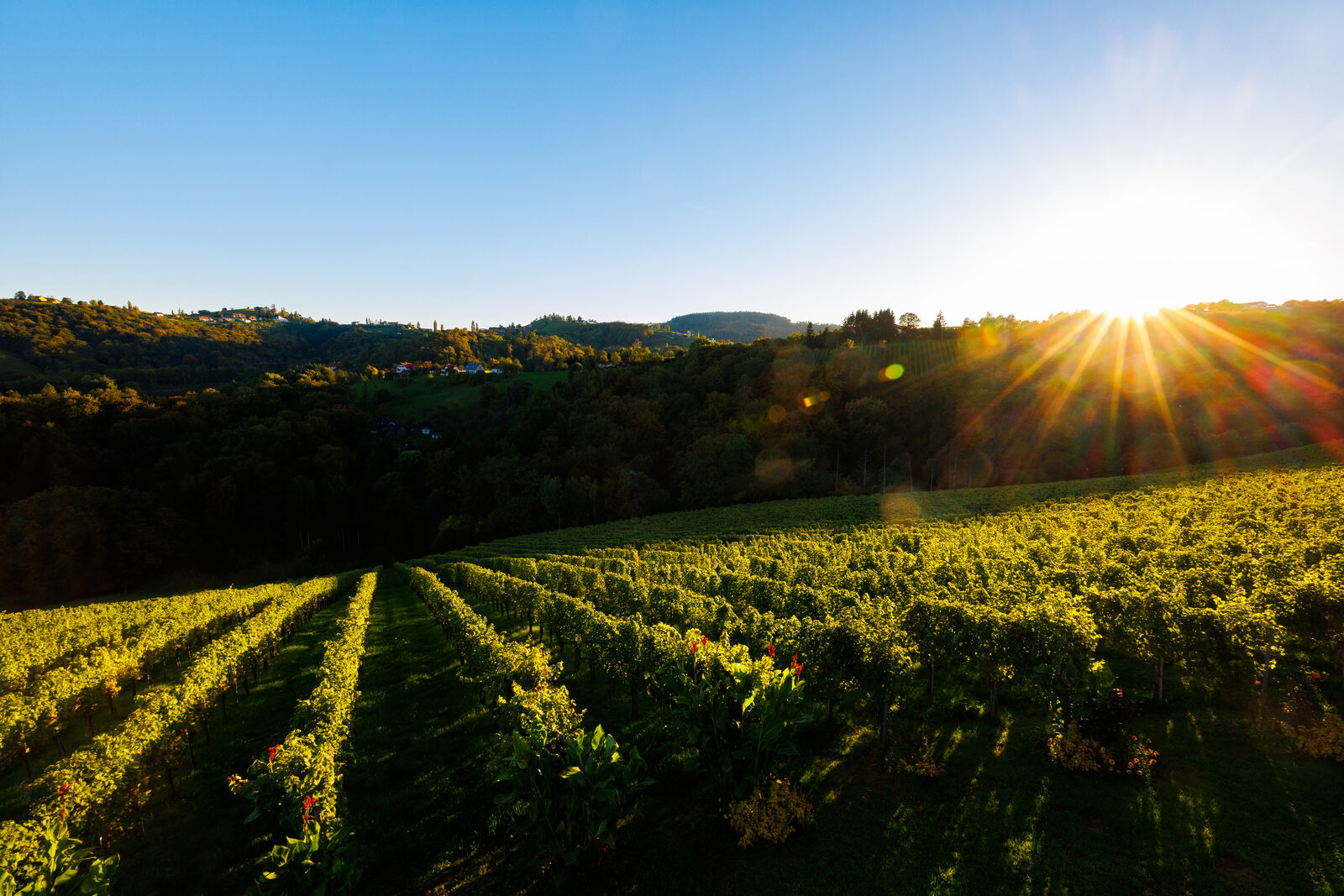
Book for the late afternoon and you end up sitting above the vines with the sun behind them. Most estates take a last tasting around five, later in summer. It is worth asking for that slot rather than booking the morning by default.
Also as a Gift or Souvenir
Many winemakers also sell their wine to take home – a small souvenir from the region that lingers on after your stay. In practice that only pays off with a kitchen and a fridge of your own: buy at three producers and you end up with eight bottles that stay in the suitcase in a hotel room. What that means for choosing where to stay is set out under Vacation apartment in West Styria.
Prefer to experience Schilcher on a bigger scale: once a year, the Stainzer Schilchertage turn the main square into a three-day wine festival. For more on what actually makes the wine itself distinctive, see Discovering Schilcher.
What to know beforehand
Opening hours are not a formality here. A Buschenschank is not a restaurant with continuous service but a farm that serves at certain times – often only on individual weekdays, following a seasonal calendar that shifts from year to year. A phone call the day before is not a courtesy; it saves you a locked door.
Allow more time than you planned. A visit that starts as a "quick tasting" regularly ends two hours later. That is rarely down to the wine and usually down to the fact that the family pours and talks themselves. Booking two more items into the same afternoon ruins the best part of it.
A tasting is rarely a package. Unlike larger wine regions there is usually no fixed tasting menu here, but individually billed glasses plus a platter. The entry stays cheap, and you taste as much as you like.
Sort out the way back in advance. Wanting to taste and then drive is a problem here as everywhere. A producer within walking or cycling distance is the practical answer; several Buschenschanken in the area also run a guest taxi service. Ask when you reserve.
Which season suits what
April to June: the first producers open after winter, the paths are empty, the vineyards freshly green. The quietest time for a tasting without crowds.
July and August: long evenings outdoors, but noticeably busier at weekends. Midweek stays relaxed.
September and October: harvest time – and the busiest period of the year. In exchange there is Sturm, the still-fermenting must you cannot get at any other time. More under Grape harvest in West Styria.
November to March: many Buschenschanken are closed. If you come then, ask specifically rather than setting off and hoping.
September and October: harvest time
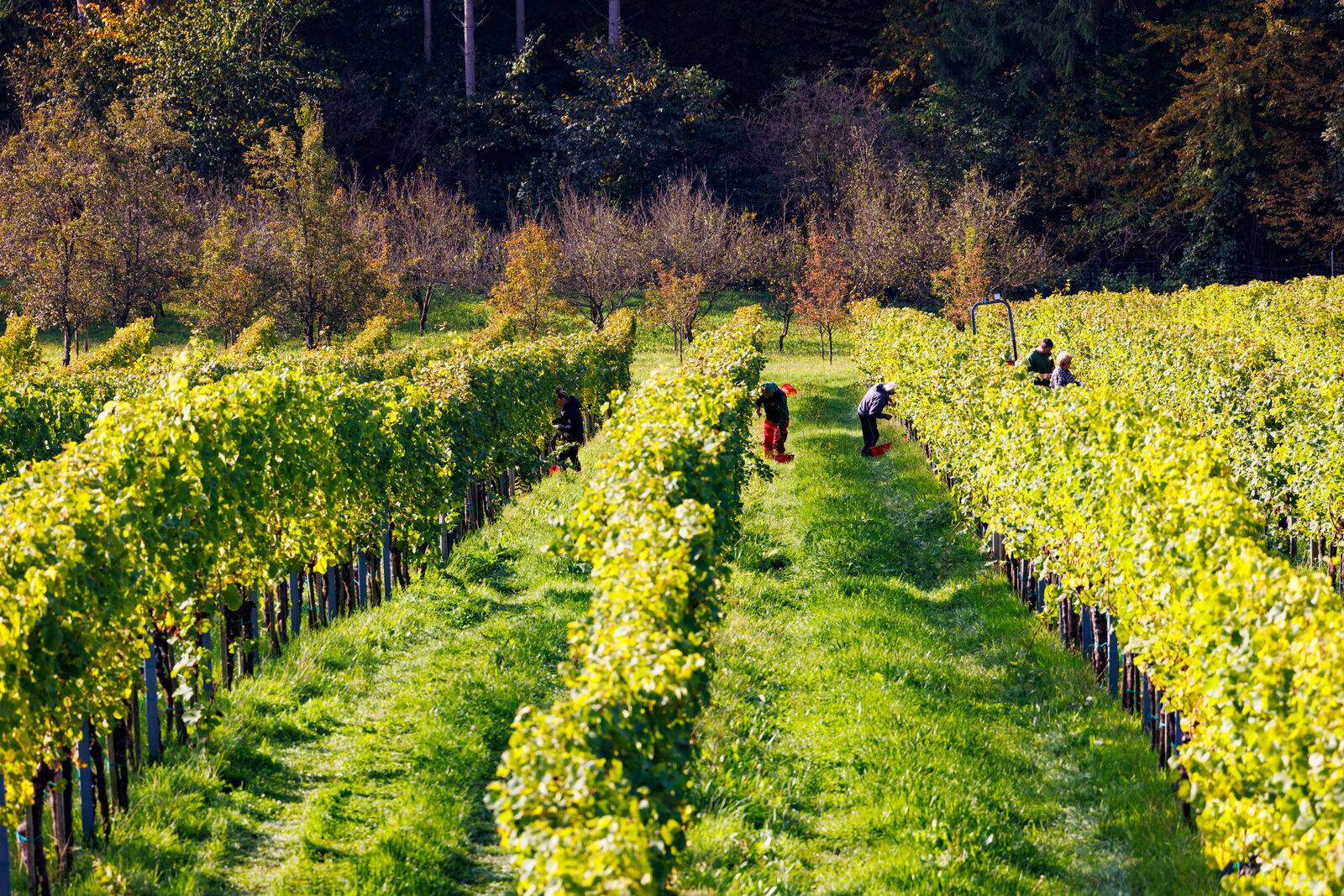
During the harvest the vineyards are busy, and that is what makes the difference: you are not tasting in a quiet room but among people who are working. Slots are tight in those weeks – two or three days' notice is the minimum, more at weekends.
Going deeper than the glass
If you want to go deeper than the glass allows: Wine cellar tours near Stainz shows what happens between grape and bottle. And if you would rather spend the afternoon between the vines than at a table: A picnic in the vineyard.
Do you need to book a wine tasting in advance?
At smaller Buschenschanken often not strictly, but it is still advisable – especially at weekends, during the September and October harvest, and for groups of about six or more. More important than booking is asking about opening hours: Buschenschanken run seasonal calendars and often open only on certain weekdays.
What does a wine tasting in the Schilcherland cost?
There is rarely a fixed tasting package as in larger wine regions. The usual arrangement is that the glasses you try are billed individually, along with a cold platter. That keeps the entry cheap and the afternoon predictable – try more wines and you pay accordingly.
How many wineries fit into one afternoon?
Realistically one, at most two. A visit rarely takes under two hours if you don't rush it, and the driving time between farms is usually underestimated. If you want to taste more, spread it over several days.
What if you don't like Schilcher?
It happens – the pronounced acidity is something you have to enjoy. Most producers also make white wines, Zweigelt and the lightly sparkling Frizzante from their own harvest. It is always worth asking during the tasting.
How do you get back afterwards?
On foot or by bike if the producer is close enough. Several Buschenschanken in the area also run a guest taxi service – ask about that when you reserve, not at the end of the evening.
Does a tasting work with children?
Yes. Most Buschenschanken around Stainz are family businesses with a playground, high chairs and children's plates – an afternoon in the vineyard often works better with children than a restaurant visit.