
Time-Out Weekend
What Two Nights Can Actually Do
A weekend is the most common form of time out and the hardest one. Two nights are not enough to change your pace - but they are enough for something else, once you stop treating them like a short holiday.
Strictly speaking, "time out" and "weekend" go together badly. Time out needs time to work - the common rule of thumb of three to four nights is not a marketing number but the observation that for most people the switch happens on the second or third full day. A weekend ends right before that.
And yet the weekend is the format almost everybody uses, because it is the only one that costs no holiday. So the question is not whether two nights are enough - they are not enough for what a week does. The question is what two nights can do instead, and how not to plan it to death.
The calculation nobody makes
On paper a weekend has two nights and two and a half days. What is actually available is considerably less.
Friday goes to the journey. Leaving at five in the afternoon means arriving between six and eight, unpacking, eating something. That is not a holiday day, that is an evening.
Saturday is the only complete day. It carries the entire expectation of the weekend - and that is usually where it fails, because it gets loaded with what was really meant for three days.
Sunday is half a day with the drive home in the back of your mind. Anyone who wants to be home by four in the afternoon is mentally already on the road from eleven.
So what is available is an evening, a day and a morning. That is little - but it is enough for an interruption, provided you accept that an interruption is something other than a recovery.
The single biggest lever sits right at the start: choosing Friday over Saturday doubles the number of nights and triples the felt length of the stay. A Saturday-to-Sunday trip is an overnight with an outing. The jump from one night to two is the largest in this whole calculation - larger than the one from two to three.
Why Friday evening is the most important part
Arriving on Friday means you have already slept somewhere else by Saturday morning. That sounds banal, but it is the difference between "we are here" and "we have just arrived". Saturday then begins with breakfast instead of orientation - and that is the only time reserve a weekend has at all.
The mistake that costs almost every time-out weekend
It is always the same one: because time is short, the plan gets dense. Two outings on Saturday, dinner with a reservation, and on Sunday one more thing, since you're here anyway.
The result is a weekend that feels like a business trip with a better view. You get home on Sunday evening having seen a lot and interrupted nothing.
Time out differs from a short break at exactly this point. A short break is allowed to be full and still be a success; it is measured by what happened in it. Time out is measured by how many hours in it were unplanned. Both are legitimate - you should just know in advance which one you are booking.
So the practical rule for two nights reads: one fixed item on Saturday, nothing else. A morning destination or an afternoon destination, not both. Everything else is buffer, and the buffer is the part you remember afterwards.
Three weekends that work
Not as prescriptions, but as three patterns that hold up in practice - each with exactly one focus.
The weekend without a destination
Arrive Friday evening, shop on the way or in the village on Saturday morning. A long walk on Saturday that does not aim at a destination but at a duration - an hour and a half, then turn around, wherever you happen to be. Nothing in the afternoon. Nothing in the evening that has to be reserved.
That sounds like very little and has the largest effect, because it is the only version that lowers decision density. Twenty small decisions a day - where do we eat, what else should we do, can we still fit it in - cost more energy than one big one. What starts directly outside the door is described under Hiking and Walking in West Styria.
The weekend with exactly one theme
One theme, followed through, instead of a list. What works best is something you cannot speed up.
Wine is the obvious choice in West Styria: a tasting or a Buschenschank on Saturday afternoon, nothing more. How a tasting actually goes is described under Wine Tasting in the Schilcherland, the region behind it under Vacation in the Schilcherland.
Walking works the same way: a half-day route on Saturday, a short loop on Sunday morning, nothing else.
Cooking is the most underrated version. One shop, one long dinner, no restaurant, no set time. It does require a real kitchen, though - which is why this version does not exist in a hotel room.
The weekend without reachability
The most radical form and the one that works fastest in two nights, because it does not depend on habituation but on a decision. Switching the phone off rather than just putting it down noticeably shortens the transition. How that runs in practice and where it usually fails is described under Digital Detox Weekend.
What a place has to manage for two nights
Over three or four nights a place forgives a lot, because there is enough time to settle in. Over two nights it does not. A breakfast window from seven to ten costs proportionally twice as much here as it does over a week, and a journey that drags on eats the only evening you have.
Where a time-out weekend fails - and what helps
Time windows. A fixed breakfast is the most expensive appointment of any weekend: it occurs twice, and both times in the tightest phase of the stay. A place with its own kitchen removes the problem entirely, because the morning then has no beginning that somebody else sets.
Travel time. For two nights there is a hard limit: if getting there takes longer than half a holiday day, the region is too far away for a weekend. Stainz is around 40 minutes from Graz, just under three hours from Vienna, about an hour and a half from Klagenfurt and roughly four from Munich - for the first three, Friday evening survives.
Obligatory company. People who arrive exhausted are often socially exhausted too. A breakfast room with thirty strangers is the nicest part of a hotel for many guests and the most demanding for anyone in that state. Two nights are not enough to get used to it.
Expectation. The quietest and most frequent reason. Anyone expecting a transformation from two nights will be disappointed and conclude that time out doesn't work for them. It simply never started. What two nights can do is interrupt - not reset.
When to add a night
There are three situations in which the extra day off on Friday or Monday pays off more than any decision about accommodation:
- When the last few weeks have been solidly full. The first day then goes to sleeping, and a weekend consists of nothing but that one day.
- When you travel as a couple with different ideas about pace. The most common conflict on short stays is not closeness or distance but speed - and speed only aligns from the third day on.
- When the journey is long anyway. From roughly four hours of driving, the effort no longer stands in any relation to two nights.
What three to four nights actually change, and why the second full day is the important one, is described in detail under Time Out in Styria.
Sunday morning
The most wasted part of a weekend. Pack until ten and then drive, and it is gone completely. Finish packing two hours before departure and go outside once more, and you have a third half-day that feels like a gift - and it comes much easier without a check-out time hanging over you.
Why West Styria suits a short format
For two nights, what a region offers matters less than how quickly it is accessible. Regions with many highlights create pressure over a weekend, because you feel you are leaving something out.
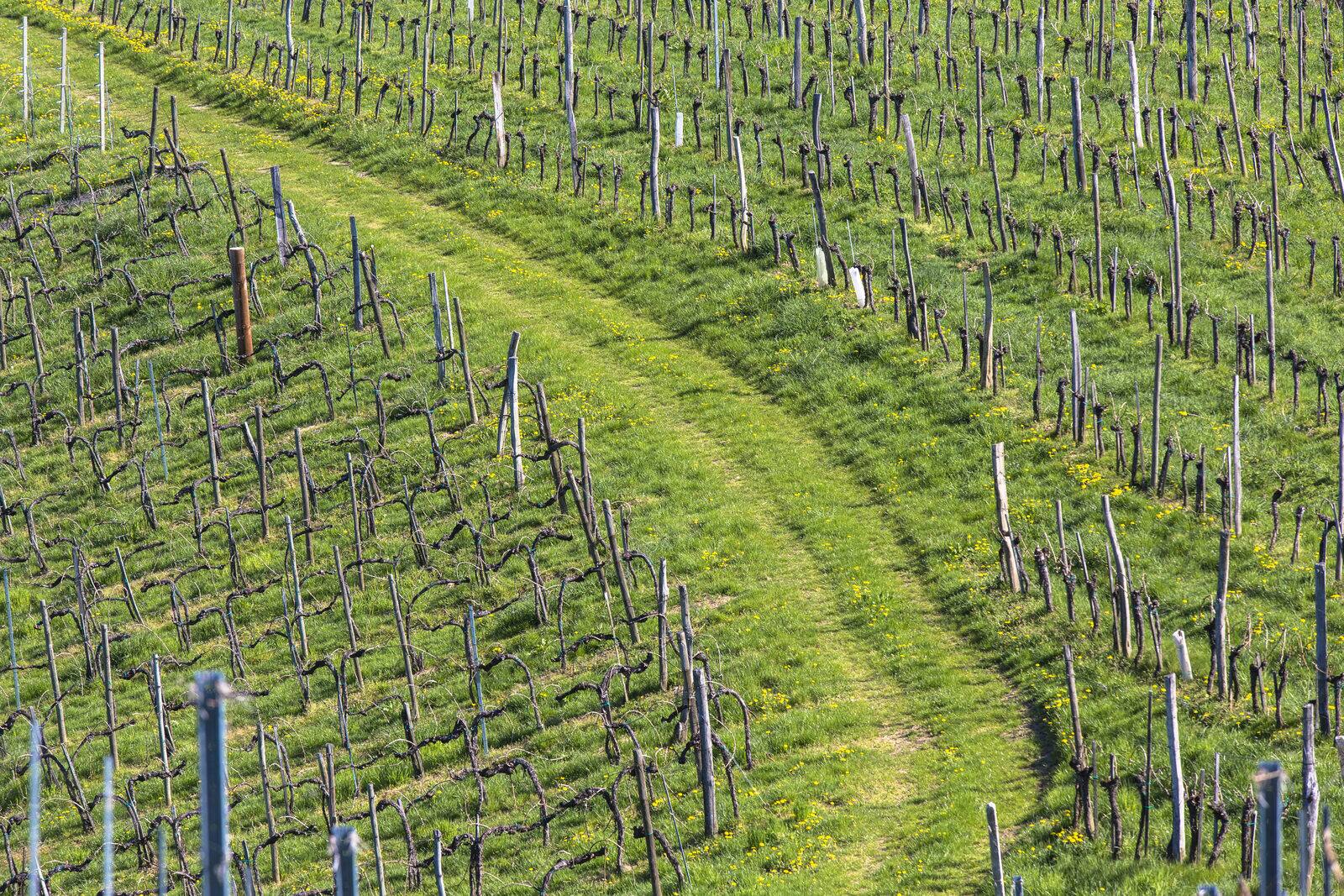
West Styria around Stainz does not have that problem. There is no attraction here that coaches stop for, and no list to work through - the reasons are described under Why Stainz and West Styria Lie off the Beaten Track. What there is: paths that start at the door, vineyards, Buschenschanken with irregular opening hours, and a village with a supermarket, a pharmacy and a main square that does not feel like a holiday resort.
Then there is accessibility. Forty minutes from Graz is the decisive figure for a weekend - close enough that Friday evening is not lost, far enough that it feels like a change of place.
A time-out weekend at Johann & Anna
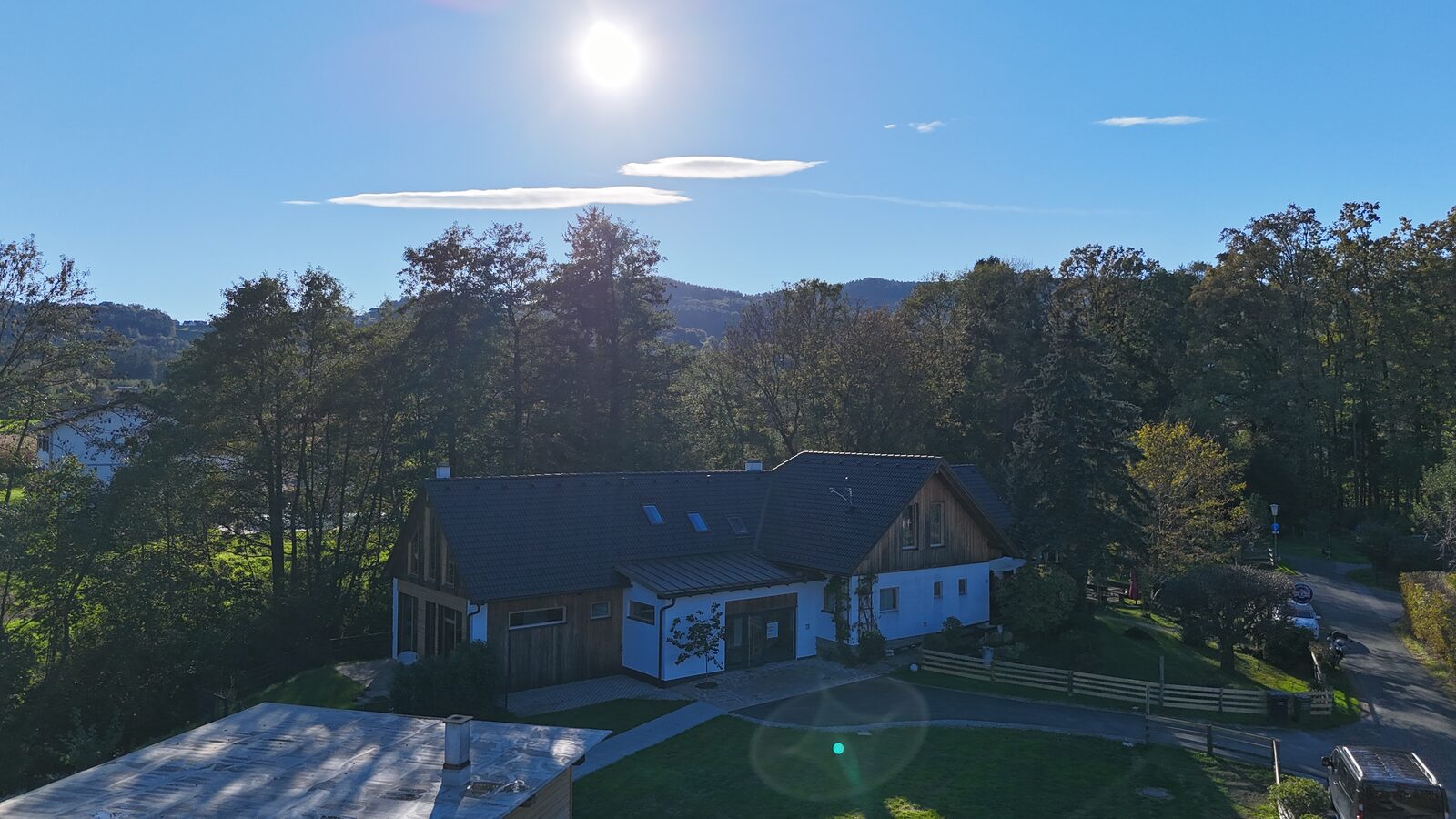
The five apartments in Stainz suit this format without it ever having been planned that way: each has its own fully equipped kitchen, its own bathroom, Wi-Fi, a free parking space on the property and access to the garden by the Stainzbach. There is no reception, no obligatory breakfast and no room service that pushes you out of the apartment.
Anyone who does want a laid table gets one: through the partnership with the Stainzerhof in the village, either as a breakfast basket ordered in advance or in the house itself - as an option, not an appointment.
Which of the five apartments suits two nights depends mostly on how much time you plan to spend inside. "Steiermark" at around 30 m² is enough if you are out most of the time; "Anna" at around 78 m² with a separate bedroom is the more comfortable choice if staying in is part of the plan. All five are compared in the apartment overview, the location in the village under Vacation Apartment in Stainz.
Two nights will not turn anyone into a different person. They can interrupt a week that would otherwise have run straight through - provided you plan them as an interruption and not as a short holiday.
Is a weekend enough for a real time out?
Not for a full change of pace - that takes three to four nights, more on that under Time Out in Styria. For an interruption, a weekend is plenty, as long as you don't fill it with a program.
Arrive on Friday or Saturday?
Friday. The difference between two nights and one is the biggest jump in the whole calculation - a Saturday-to-Sunday stay is an overnight with an outing, not a weekend.
What should you never plan into a time-out weekend?
More than one fixed item on Saturday. Two outings in one day produce exactly the rhythm you drove away from.
Does an apartment make sense for only two nights?
Yes, the advantages start working from the second night, above all the absence of somebody else's breakfast window. For a single night a hotel is more practical, see Hotel Stainz.
When is the best time for a time-out weekend?
May to June and from November onwards. September and October are the busiest months here, because grape harvest and Buschenschank season coincide.
Does a time-out weekend work on your own?
Yes, and for many people better. What matters is a place where being alone doesn't stand out - no reception desk, no shared breakfast room.
How long does it take to get here from Vienna or Graz?
Around 40 minutes by car from Graz, two and a half to three hours from Vienna depending on traffic. From both, Friday evening is still usable as an arrival evening.